8 vies pour la planète
Maison des Associations
Av. Saint-Exupéry - 13250 Saint-Chamas, France
contact@8vies.fr
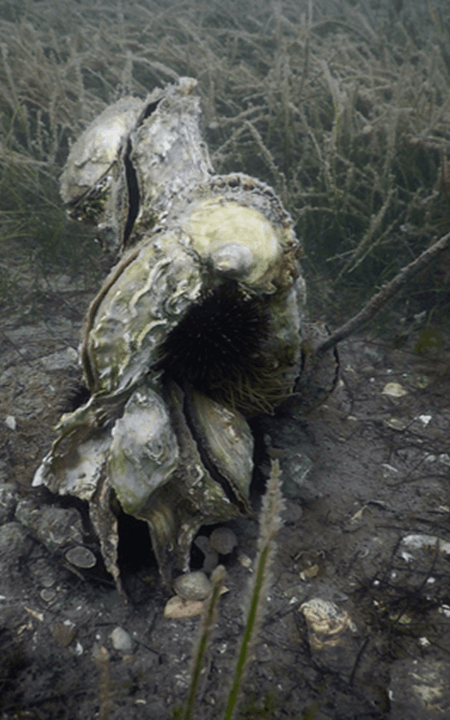
The flat oyster plays an important ecological role in marine ecosystems.
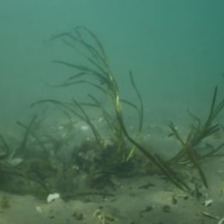
In resonance with the ZoRRO project (Seagrass, their Rapid Return as an Objective), we named the oyster reintroduction project "Sergent Garcia". The year 2024, during which we held preparation meetings and conducted some trials, constitutes year 0 (SG0).
Many similar projects already exist worldwide. We are particularly familiar with the Scottish Seawilding project, which we visited, as well as experiments carried out in Brittany and the United Kingdom. We aim to conduct a gradual reintroduction based on local resources (both oysters and volunteers).
Benefits of reintroducing flat oysters in the Berre lagoon
Their filtration process helps clarify water by removing suspended elements such as bacteria and phytoplankton, thereby contributing to water purification and reducing eutrophication levels.
Like other filter-feeding bivalves, flat oysters regulate nutrient cycles such as nitrogen and phosphorus, helping to reduce eutrophication of the lagoon.
Flat oyster beds provide habitats for many marine species. The crevices, interstices and shell surfaces offer breeding, refuge and feeding zones for fish, crustaceans and molluscs.
Oyster reefs are carbon sinks, capturing carbonate ions (CO₃²⁻) from water to form shells (made of calcium carbonate, CaCO₃).